
Chessmaster

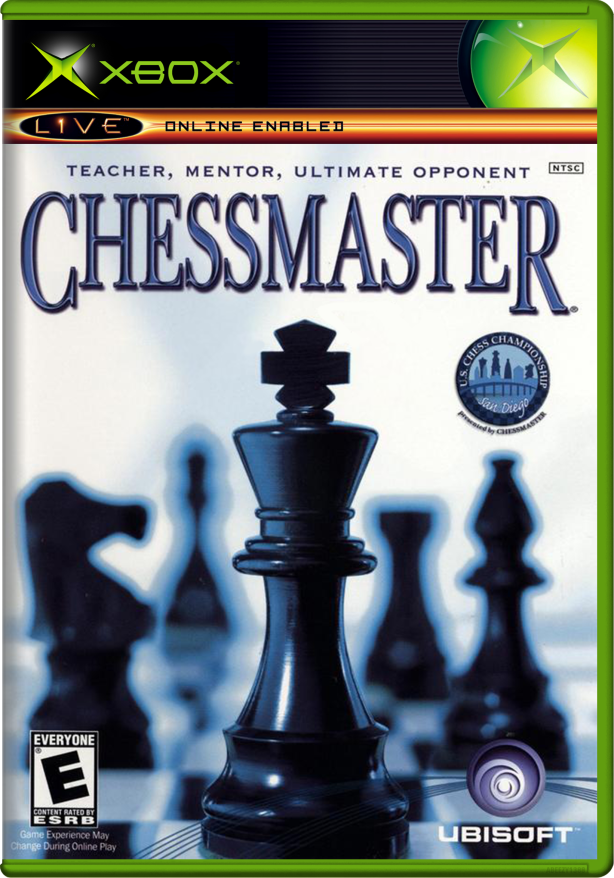
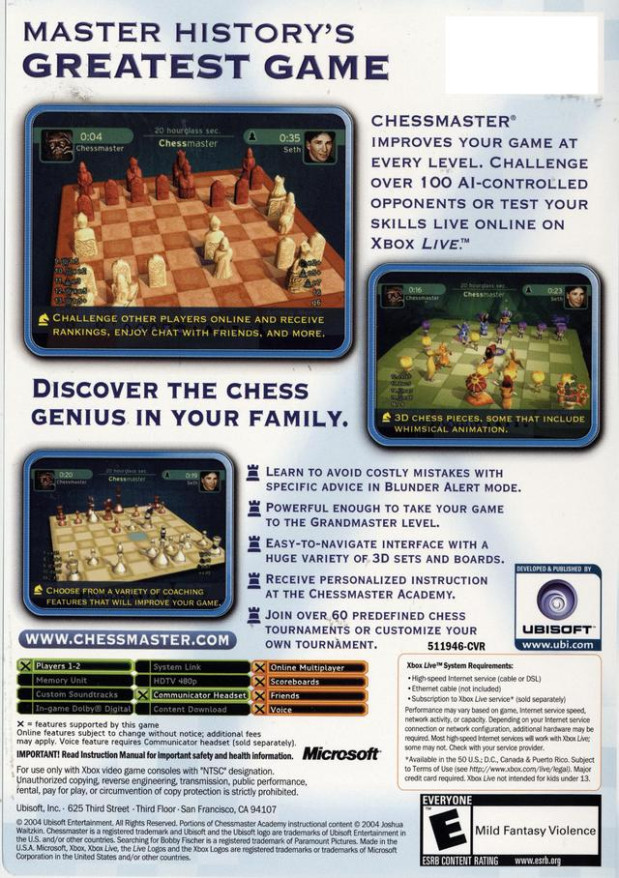
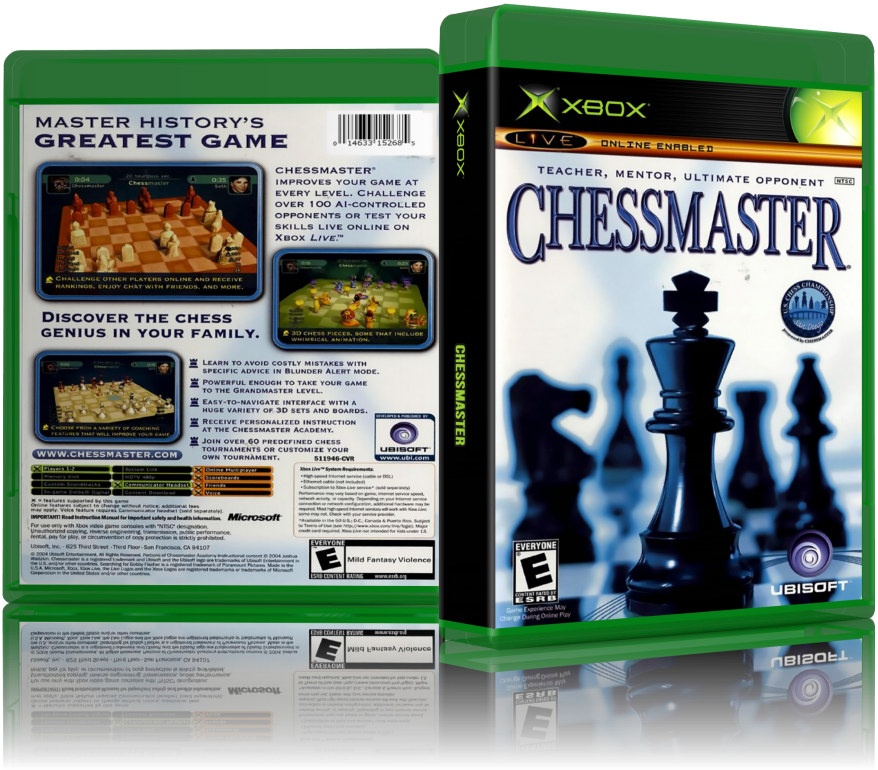


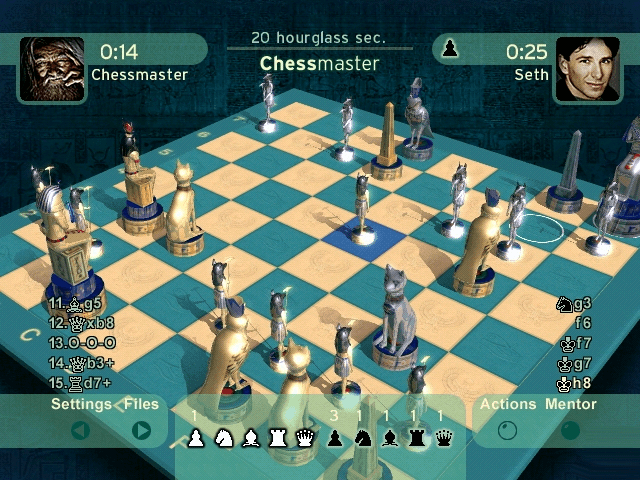
Platform: Microsoft Xbox
Game Type: Released
Max Players: 2
Genre: Sports
Developers: Ubisoft Bucharest
Publishers: Ubisoft
Cooperative: No
ESRB: E - Everyone
Chessmaster Game Overview
Chessmaster: The Grandmaster Chronicles transforms the ancient game of chess into an immersive narrative experience for the original Xbox. Players assume the role of an emerging chess prodigy guided by a mysterious former champion through the competitive world of professional chess. The game combines authentic chess mechanics with a compelling story featuring rival competitors, political intrigue within chess federations, and psychological warfare across the board. Players navigate tournament circuits from local competitions to international championships while managing their mental condition, training regimens, and public persona. The revolutionary adaptive chess engine creates opponents with distinctive personalities based on historical grandmasters, responding dynamically to your evolving play style. Beyond technical chess skills, players must balance relationships with mentors, rivals, and federation officials while deciding whether to expose corruption within the chess world or pursue personal glory. This innovative approach elevates chess from a pure strategy game to a rich character driven experience that explores the human elements behind competitive mastery.
Chessmaster
In the competitive world of strategic thinking, Chessmaster: The Grandmaster Chronicles emerges as the definitive chess experience on the original Xbox platform. Set against the backdrop of an international chess tournament circuit, players assume the role of an aspiring chess prodigy with humble beginnings in a small town chess club. Your character begins as an unranked amateur with raw talent that catches the eye of a retired Grandmaster who sees immense potential in your natural aptitude for the game. This mentor, once a world championship contender who mysteriously withdrew from professional play at the height of his career, offers to guide you through the ranks of competitive chess. The game presents a comprehensive journey through the nuanced world of professional chess, combining traditional board play with an engaging narrative structure that explores the psychological aspects of the game. Players must navigate not only the sixty four squares of the chessboard but also the complex relationships, rivalries, and political manoeuvres that define the upper echelons of chess competition. As your character develops their skills, they uncover the chess world is filled with colourful personalities, each with unique playing styles and psychological approaches to the game that must be understood and countered to achieve victory.
The Tournament Circuit
The competitive structure of Chessmaster: The Grandmaster Chronicles revolves around a meticulously crafted tournament system that mirrors the real world chess circuit with remarkable accuracy. Players begin their journey in local competitions, gradually working their way through regional qualifiers, national championships, and ultimately to the prestigious international events that determine the world rankings. Each tournament venue has been created with exceptional attention to detail, from small town community centres with modest accommodations to the grand halls of Moscow, Paris, and New York where the elite competitions take place. The varying environments affect your character in subtle ways, with factors such as jet lag, unfamiliar surroundings, and the pressure of large audiences influencing your performance. The game introduces an innovative stress management system where maintaining optimal mental condition becomes as important as tactical knowledge on the board. Between matches, players must make critical decisions about training regimens, study priorities, and even social interactions that shape their evolving chess style. The tournament directors and organisers form a crucial part of the narrative, with some showing clear favouritism toward established players while others maintain strict adherence to regulations. Navigating these political waters becomes increasingly important as your reputation grows, with opportunities to expose corruption within the chess federation forming a compelling subplot that runs parallel to your competitive ambitions.
The Mentor Relationship
Central to the narrative arc of Chessmaster: The Grandmaster Chronicles is the evolving relationship between your character and their enigmatic mentor. Initially presenting himself as merely a technical coach, the true depth of his character emerges gradually throughout the campaign. Through a series of tutorial sessions disguised as mentor meetings, players learn advanced chess concepts and historical strategies employed by the greatest minds in chess history. These sessions blend seamlessly into the story, revealing fragments of your mentor's troubled past and the controversial championship match that led to his abrupt retirement. The mentor does not merely provide technical instruction but imparts philosophical approaches to the game, emphasising that true mastery comes from understanding oneself as much as understanding chess theory. As your character progresses through the ranks, the dynamic between student and teacher evolves, with your growing reputation creating both pride and tension in the relationship. Your mentor maintains connections with influential figures in the chess world, occasionally using these relationships to secure opportunities for your advancement, though these favours often come with complicated moral implications and expectations. The game presents players with meaningful choices about how much to rely on the mentor's assistance versus charting their own path, with each decision affecting both gameplay mechanics and narrative outcomes in subtle but significant ways that persist throughout the campaign.
The Chess Engine and Learning System
The technical foundation of Chessmaster: The Grandmaster Chronicles rests upon its revolutionary adaptive chess engine that provides unprecedented realism in computer opponents. Unlike traditional chess programs that rely solely on calculating optimal moves, the game introduces personality profiles for each competitor based on historical chess figures and contemporary grandmasters. These profiles influence not just the strategic choices made by opponents but also their responses to pressure, tendency to blunder in certain positions, and psychological weaknesses that can be exploited. The game features a comprehensive learning system that tracks your playing patterns, identifying strengths to enhance and weaknesses to address through customised training modules. These training sessions manifest as minigames that transform abstract chess concepts into engaging challenges, teaching principles like piece coordination, pawn structure, and positional evaluation through practical application rather than rote memorisation. Players can select specialised coaches beyond their primary mentor, each focusing on different aspects of chess mastery such as opening theory, endgame technique, or psychological resilience. The skill progression system allows players to allocate development points earned through tournament performance and training, creating a chess style uniquely suited to their preferences and aptitudes. This system presents meaningful choices between developing a balanced approach or specialising in particular aspects of play, such as aggressive attacking chess or solid defensive positioning, with each path offering distinct advantages and challenges in different competitive scenarios.
The Rival and The Championship
As your character ascends through the competitive rankings, they develop a compelling rivalry with another rising star in the chess world whose approach to the game stands in stark contrast to your own methods. This rival character possesses a distinctive personality and playing style that evolves in response to your successes and failures, creating a dynamic competitive relationship that spans the entire campaign. Initially dismissive of your abilities, the rival becomes increasingly fixated on defeating you as your reputation grows, employing psychological tactics and even attempting to disrupt your preparation for important matches. The narrative builds toward an inevitable confrontation in the world championship, a multiday match consisting of twelve games that serves as the climax of the campaign. The championship match incorporates all the systems and skills developed throughout the game, with each victory or defeat dramatically affecting your character's confidence and mental state for subsequent games. Between championship games, players must make critical decisions about opening preparation, rest schedules, and media engagements, with each choice influencing performance in subtle ways. The championship venue becomes a character in itself, with crowds reacting dynamically to the unfolding drama on the board and media commentary reflecting the historical significance of key moments. The outcome of this championship match is not predetermined but depends entirely on player performance, with multiple potential conclusions to the narrative based on whether you secure victory, suffer defeat, or perhaps most dramatically, expose corruption within the chess federation that threatens the legitimacy of the entire championship.
The Chess World Politics
Beyond the sixty four squares of the chessboard, Chessmaster: The Grandmaster Chronicles presents a fascinating exploration of the politics and power structures that govern international chess competition. The game introduces a complex network of chess federation officials, sponsors, and influential coaches whose interests often conflict with the competitive integrity of the sport. Players encounter situations where tournament invitations, favourable pairings, and even arbiter decisions appear suspiciously beneficial to certain competitors, particularly those from countries that provide substantial financial support to the federation. As your character gains prominence, opportunities arise to align with various factions within the chess world, each offering advantages with corresponding ethical compromises. These choices manifest in a reputation system that tracks how you are perceived by different stakeholders in the chess community, from traditionalists who value sporting integrity above all to modernisers seeking to commercialise the game for broader appeal. The narrative does not present simple right and wrong answers but rather complex situations where players must determine their own priorities and boundaries. Media management becomes an increasingly important aspect of the game as your profile rises, with press conferences and interviews providing opportunities to voice concerns about governance issues or remain diplomatically silent to protect career prospects. The corruption subplot reaches its zenith during the world championship, where evidence of match fixing and rated manipulation threatens to undermine the legitimacy of the entire competitive structure, forcing players to decide whether pursuing personal glory takes precedence over exposing systemic problems within the sport they love.
The Psychological Warfare
Chessmaster: The Grandmaster Chronicles delves deeply into the psychological dimensions of competitive chess, where matches are often decided by mental resilience rather than purely tactical calculation. The game introduces an innovative stress management system that simulates the cognitive and emotional challenges faced by elite players during high stakes tournaments. Your character experiences fluctuating concentration levels, confidence, and emotional states that directly impact performance at the board, requiring players to develop strategies for maintaining optimal psychological condition throughout lengthy competitions. The game presents various techniques for psychological preparation and recovery, from meditation and physical exercise to specific visualisation routines used by actual grandmasters. These techniques must be employed strategically, as different approaches prove effective for different personality types and competitive situations. Equally important is the psychological warfare waged across the board, with the game providing options for subtle intimidation tactics, strategic offers of draws, and even psychological baiting to induce opponents into playing positions that fall outside their comfort zone. Players must learn to read subtle cues in opponent behaviour that indicate mounting pressure or diminishing confidence, creating opportunities to increase aggression at precisely the right moment. The relationship between physical stamina and mental performance is modelled with remarkable sophistication, with factors such as sleep quality, nutrition, and stress management directly affecting calculation ability and decision making during critical moments. Players must carefully balance tournament scheduling with recovery periods, as the cumulative effects of mental fatigue can lead to catastrophic blunders even for the most technically skilled competitors.
Legacy and Impact
The concluding chapter of Chessmaster: The Grandmaster Chronicles explores the lasting influence your character has on the world of chess beyond competitive achievements. Regardless of whether you secured the world championship, your approach to the game and public persona has inspired a new generation of players who emulate both your chess style and ethical stance within the sport. The game presents players with meaningful choices about their post championship career, offering pathways to become a dedicated coach developing future champions, a chess ambassador bringing the game to underserved communities, or perhaps a reformer working to address the corruption and governance issues encountered throughout the campaign. These epilogue choices provide satisfying closure to narrative threads established earlier while highlighting that true legacy extends beyond trophies and titles. The relationship with your mentor reaches its natural conclusion as you potentially surpass their achievements, with the possibility of reconciliation regarding past controversies that have haunted them throughout your journey together. The game acknowledges that chess careers have natural lifecycles, with even the greatest players eventually facing declining performance and the emergence of new talents with innovative approaches to the ancient game. This bittersweet reality is presented not as tragedy but as part of the beautiful continuity of chess tradition, where knowledge and passion transfer across generations. The final scenes reflect on how your character has changed the perception of chess in popular culture, perhaps making the strategic pursuit more accessible to broader audiences or elevating its status as an intellectual art form deserving of greater appreciation and respect in the wider world of competitive endeavours.
