
Crime Life Gang Wars


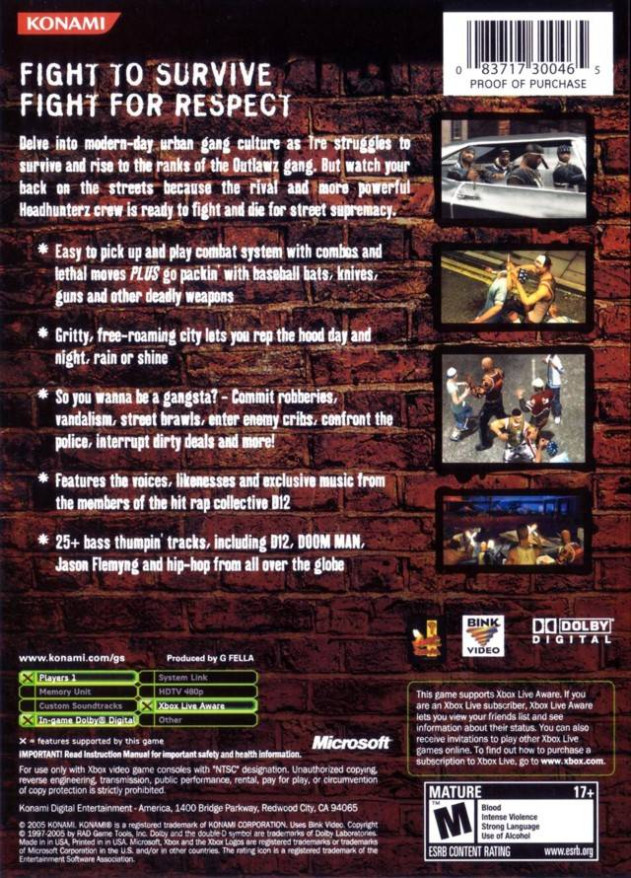


Game Type: Released
Max Players: 1
Genre: Action
Developers: Hothouse Creations
Publishers: Konami
Cooperative: No
PEGI: 18
Crime Life Gang Wars Game Overview
Crime Life Gang Wars delivers an uncompromising urban crime experience on the original Xbox, placing players in the role of Tre, a reluctant returnee to the troubled streets of Grand Central City who finds himself drawn back into the notorious Outlawz gang. The game combines visceral street combat with strategic territory management as players battle rival factions for control of neighbourhoods, businesses, and criminal enterprises across a densely realised urban landscape. The narrative explores themes of loyalty, betrayal, and the cycle of violence through a morally complex story where decisions have far reaching consequences for both the gang and surrounding communities. Players must recruit and manage gang members, each with unique skills and loyalty parameters, while establishing various legal and illegal operations to fund their growing criminal empire. A sophisticated law enforcement system responds dynamically to player notoriety, with different police units employing varied tactics to counter gang activities. The reputation system tracks relationships with gang members, rival factions, and local residents, creating a web of shifting alliances and conflicts that require careful navigation. With its blend of brutal action, strategic depth, and narrative complexity, Crime Life Gang Wars presents a multifaceted examination of gang culture and urban struggle unlike any other title available for the Xbox platform.
Crime Life Gang Wars: The Urban Struggle
Crime Life Gang Wars thrusts players into the gritty underbelly of Grand Central City, a sprawling urban metropolis where gang culture dominates the streets and violence erupts at every corner. As Tre, a young man returning to his childhood neighbourhood after years away, players are drawn into a complex web of loyalty, betrayal, and survival within the notorious Outlawz gang. The city stands divided among rival factions vying for control of territory, illegal businesses, and the lucrative drug trade that fuels the underground economy. The once powerful Outlawz have seen their influence wane under pressure from aggressive rivals and corrupt police forces determined to maintain control through any means necessary. What begins as a reluctant homecoming quickly escalates as Tre discovers his childhood friend Marcus has risen to a leadership position within the Outlawz but struggles to maintain unity and purpose within the ranks. The narrative explores themes of brotherhood, redemption, and the cycle of violence that traps those born into disadvantaged communities with limited opportunities. As players progress through the story, they will navigate morally complex situations that challenge their loyalties and force them to consider the consequences of life in a criminal organisation. The urban landscape serves as more than mere backdrop, becoming a character itself with distinct neighbourhoods reflecting economic disparity, cultural diversity, and the stark reality of inner city struggles.
Gameplay Mechanics and Features
Crime Life Gang Wars delivers a unique blend of action, strategy, and role playing elements that capture the multifaceted nature of gang operations. The core combat system emphasises brutal hand to hand fighting with an extensive array of combos, grapples, and environmental interactions that allow players to develop their own fighting style. While firearms play a role in the game, ammunition scarcity and increased police response make gun violence a strategic consideration rather than the default approach. Territory management forms a crucial gameplay pillar, with players able to claim neighbourhoods for the Outlawz through story missions and side activities, generating income and resources while expanding their sphere of influence. The respect system tracks player actions and decisions, affecting how gang members, civilians, and rival factions respond to their presence. Higher respect unlocks new missions, dialogue options, and potential recruits willing to join your cause. The game features a dynamic economy where players can invest in legitimate businesses as fronts for illegal operations, balancing risk and reward as they launder money and expand their criminal empire. Player customisation allows for detailed personalisation of appearance, fighting style, and specialisation paths that emphasise different aspects of gang leadership from enforcer to strategist to negotiator. The wanted system implements a nuanced approach to law enforcement response, with police tactics and aggression scaling based on player actions, territory control, and story progression.
The Gang Hierarchy and Recruitment
Crime Life Gang Wars presents a sophisticated system of gang structure and personnel management that brings depth to the criminal organisation simulator. The Outlawz operate with a clearly defined hierarchy that players must navigate and eventually reshape as they rise through the ranks. Beginning as a low level soldier, Tre must earn respect through successful missions, territorial gains, and wise decisions that benefit the organisation. The recruitment system allows players to identify potential gang members throughout the city, each with unique backgrounds, skills, and loyalty parameters that affect their performance and reliability in different situations. These recruits can be assigned to various roles within the organisation, from street level dealers and lookouts to enforcers and lieutenants who oversee specific territories or operations. The loyalty system requires regular attention, as gang members respond to how they are treated, the success of the organisation, and personal relationships developed through side missions and conversations. Neglected or mistreated members may betray the player, defect to rival gangs, or become informants for law enforcement, creating unexpected complications. Special characters with unique abilities can be recruited through specific story branches, offering powerful advantages but often coming with complicated allegiances or personal agendas that may conflict with the greater goals of the Outlawz. The mentor system allows experienced gang members to train newer recruits, creating a progression path that strengthens your organisation over time and creates meaningful connections between characters.
Territory Control and Business Operations
Territory forms the backbone of power in Crime Life Gang Wars, with neighbourhood control providing tangible benefits while creating new responsibilities and threats. The city is divided into distinct districts, each with unique characteristics, resident gangs, and economic opportunities that influence gameplay strategies. Claiming territory involves completing specific missions to eliminate rival presence, establishing safe houses, and winning over local residents through protection or intimidation. Once controlled, territories generate regular income but require constant defence against encroaching rivals in dynamic encounters that can erupt without warning. The business system allows players to establish both legitimate and illegal operations throughout their territory, from protection rackets and gambling dens to front businesses like laundromats and restaurants that help launder illicit gains. Each business type offers different risk and reward profiles, with more profitable ventures attracting greater attention from both rival gangs and law enforcement. The supply chain management aspect requires players to secure and protect the flow of resources for drug production, weapons acquisition, and other criminal enterprises, creating vulnerable points that strategic rivals may target. Territory improvements become available as player influence grows, allowing for the establishment of gang headquarters, training facilities, and defensive positions that provide gameplay advantages. The neighbourhood reputation system tracks how local residents perceive the Outlawz, with positive relations providing valuable intelligence and sometimes protection, while negative relations can lead to civilian informants and increased police presence.
Rival Factions and Alliances
Crime Life Gang Wars features a complex ecosystem of competing criminal organisations, each with distinct identities, specialities, and territories that create a living backdrop for player activities. The Royals control the affluent downtown district, specialising in white collar crime, high end drug distribution, and political corruption that gives them significant influence with city officials and police leadership. Their refined approach contrasts sharply with the Butchers, a notoriously violent gang controlling the industrial zone who specialise in weapons trafficking, extortion, and particularly brutal enforcement tactics that make them feared across all factions. The Triads maintain a disciplined operation in Chinatown, focusing on gambling, human trafficking, and international connections that provide unique resources unavailable to locally focused gangs. The Kings, an old established gang with traditional values, control the historic district and operate with a strict code of honour that occasionally creates opportunities for alliance despite territorial disputes. The dynamic faction relation system tracks the ever shifting landscape of gang politics, with player actions directly influencing how these groups perceive and respond to the Outlawz. Temporary alliances can be formed through negotiation missions, offering mutual benefits against common enemies but carrying the constant risk of betrayal. The faction reputation system operates independently from territory control, allowing for complex situations where respected enemies might be convinced to negotiate rather than fight, or where distrusted allies might secretly undermine joint operations.
The Law Enforcement Response
Crime Life Gang Wars implements a sophisticated system representing the various levels of law enforcement that respond to gang activity throughout Grand Central City. Regular patrol officers represent the first line of response to visible criminal activity, dealing with minor infractions and street level disturbances with limited equipment and authority. As player notoriety increases or specific high profile crimes are committed, specialised units become involved, including narcotics detectives focusing on drug operations, gang task force officers with detailed knowledge of gang structure and members, and heavily armed tactical teams deployed for the most dangerous situations. The corruption system allows players to identify and exploit dishonest officers through bribery or blackmail, creating opportunities to receive advanced warning of raids, have charges reduced, or even gain protection for certain operations. However, these corrupt relationships carry significant risks, as internal affairs investigations periodically sweep through the department, potentially turning your police assets into liabilities seeking to save themselves by informing on your organisation. The prison system comes into play if the player or key gang members are arrested and convicted, creating unique gameplay sequences focused on surviving incarceration, maintaining gang loyalty on the outside, and either serving time or orchestrating an escape. The evidence system adds strategic depth to criminal activities, as police build cases against the player and their organisation over time based on witnesses, surveillance, and physical evidence left at crime scenes. Careful players can take precautions to minimise this evidence trail, while careless actions accelerate the case building process.
Character Development and Skills
Crime Life Gang Wars features a nuanced character progression system that reflects the growth of Tre from street level enforcer to sophisticated gang leader through experience and adaptation. The skill tree is divided into several categories that represent different aspects of criminal expertise and leadership qualities developed through gameplay. Combat skills enhance fighting abilities through new moves, combination attacks, and improved damage resistance that make the player more effective in direct confrontations. Street smarts improve awareness of police activity, hidden opportunities, and potential threats, while also unlocking dialogue options that can defuse volatile situations without violence. Business acumen develops as players successfully manage criminal enterprises, unlocking more profitable ventures and better money laundering capabilities that protect earnings from seizure. The leadership category improves the performance of recruited gang members, increases loyalty development, and expands the number of subordinates that can be effectively controlled at one time. Weapons proficiency enhances accuracy, reload speed, and the ability to use more advanced firearms effectively when situations escalate beyond hand to hand combat. The reputation system interacts with these skills, as different development paths alter how the player is perceived by allies, enemies, and civilians throughout Grand Central City. The mentor system allows players to learn special abilities from senior gang members through completion of specific side missions, creating meaningful relationships while expanding capabilities. The skill decay mechanic encourages consistent use of abilities, as rarely utilised skills can diminish over time, reflecting the realistic requirement to maintain proficiency through practice.
Story Missions and Side Activities
Crime Life Gang Wars balances narrative progression with player freedom through a carefully structured mission system that advances the central story while allowing for exploration and optional content. The main story arc unfolds through critical missions that reveal the complex history of the Outlawz, the personal journey of Tre, and the evolving power dynamics of Grand Central City as various factions respond to your growing influence. These missions feature extensive cutscenes, unique set pieces, and crucial decisions that shape the direction of the narrative and the development of key relationships. Complementing this core experience are territory missions that focus on expanding gang control throughout the city, with each neighbourhood presenting unique challenges and opposition based on existing power structures and civilian demographics. Character specific side missions develop the personalities and backstories of your lieutenants and other significant figures in the gang ecosystem, building loyalty while often providing unique rewards or abilities unavailable through other activities. The dynamic event system generates spontaneous situations throughout the city that require immediate attention, from territory incursions by rival gangs to unexpected police raids or internal disputes among gang members that threaten organisation stability. Recreational activities provide gameplay variety and opportunities for skill development, including illegal street racing that improves driving abilities, underground fighting tournaments that enhance combat techniques, and gambling mini games that test luck and strategic thinking. Collection missions encourage exploration of the detailed urban environment, with hidden packages, territorial tags, and unique items scattered throughout the city that provide substantial rewards when accumulated.
Moral Choices and Narrative Branches
Crime Life Gang Wars distinguishes itself through a morality system that avoids simplistic good versus evil dichotomies in favour of complex situations with significant consequences regardless of chosen path. The decision making framework focuses on the tension between personal loyalty, gang prosperity, and the broader impact on the urban community that houses your criminal empire. Key narrative decisions present players with difficult choices that reflect the reality of gang leadership, where protecting close allies might conflict with organisational interests, or where short term profits might create long term problems for territory control and civilian relations. The leadership style system tracks whether players rule primarily through fear, respect, or a balanced approach, affecting how gang members respond to orders, how civilians interact with your presence, and how rival gangs approach potential conflicts or alliances. Family dynamics play a crucial role in the narrative, as Tre navigates relationships with blood relatives caught in the crossfire of gang warfare, creating powerful moments where personal connections and criminal responsibilities come into direct conflict. The community impact system monitors how player actions affect the neighbourhoods under gang control, with excessive violence, drug promotion, and exploitation creating desperate living conditions, while more measured approaches with community reinvestment can actually improve areas despite the inherently criminal nature of gang operations. Multiple narrative branches lead to significantly different mid game scenarios and several distinct endings that reflect the accumulated weight of player decisions throughout the campaign, encouraging replay to explore alternative approaches to the criminal underworld.
Legacy and Impact
Crime Life Gang Wars leaves an indelible mark on the landscape of urban crime games through its unflinching portrayal of gang culture and the societal conditions that perpetuate cycles of violence and criminal enterprise. By refusing to either glamorise or simplistically condemn its subject matter, the game creates a nuanced exploration of how economic inequality, limited opportunity, and institutional failures contribute to the growth of gang structures as alternative systems of order and advancement. The sophisticated territory management and character progression systems established new standards for crime simulators, demonstrating how strategic elements could be successfully integrated with action gameplay to create a more holistic representation of criminal organisation operations. The narrative approach of examining crime through the lens of community impact influenced later titles in the genre, encouraging players to consider the wider consequences of violence and illicit activity beyond immediate gameplay rewards. Technical innovations in the dynamic city simulation, with its intricate systems of faction relationships, law enforcement response, and civilian interactions, laid groundwork for future open world crime games that sought to create living urban environments responding organically to player decisions. Despite controversy surrounding its mature content, the game sparked meaningful discussions about the responsibility of interactive media when addressing real world issues, particularly those affecting vulnerable communities. The cultural legacy of Crime Life Gang Wars extends beyond gaming, as its authentic dialogue, character development, and scenario design have been recognised for contributing to a more realistic portrayal of urban challenges that counters simplistic stereotypes while acknowledging difficult truths about life in marginalised neighbourhoods.


